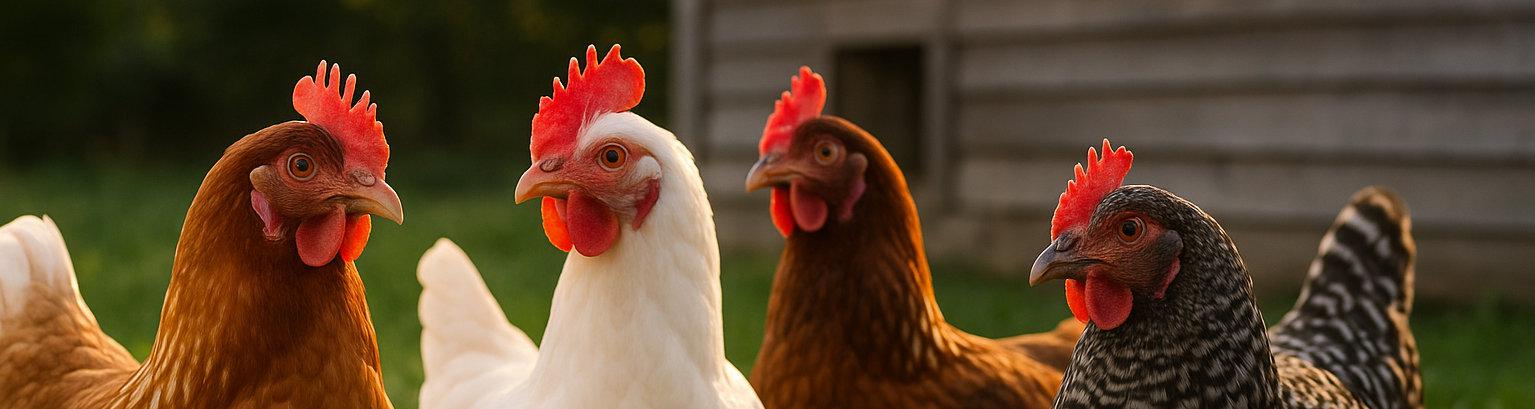

Raising Chickens: A Beginner’s Guide to Happy, Healthy Hens
There’s something magical about collecting fresh eggs each morning. In this guide, we’ll cover breeds, coops, feeding, eggs, and health—everything you need to start your backyard flock with confidence.
Choosing the Right Breeds
For families and first–timers we love Buff Orpingtons (gentle), Rhode Island Reds (hardy layers), Plymouth Rocks (friendly), and Leghorns (prolific layers).


Quick tip: Start with 4–6 hens. It’s easier to manage and you’ll still get plenty of eggs.
Housing: Build or Buy a Coop
Prioritize predator–proofing, dry bedding, good ventilation, 1 nest box per 3 hens, and sturdy roosts. Make cleaning easy – future you will thank you!


Feeding & Watering Basics
Healthy hens start with fresh water and balanced feed.
- Feed: Use a quality 16% layer feed once your birds begin laying. Offer feed free-choice in a weather-safe feeder.
- Calcium & grit: Put oyster shell (for strong shells) and insoluble grit (for digestion) in separate side dishes—hens take what they need.
- Treats (in moderation): Veggie scraps, herbs, black soldier fly larvae, and scratch can be fun, but keep treats to ≤10% of the diet.
Quick tip: Hang feeders and waterers at back height to reduce spills and waste.


Eggs & Nesting
Happy hens lay best when nesting feels cozy and clean.
- Box ratio: Plan 1 nest box for every 3–4 hens (about 12″×12″×12″ each).
- Bedding: Use clean straw, pine shavings, or nesting pads.
- Light & privacy: Keep boxes dim, away from drafts, and slightly lower than your roosts.
- Collect often: Gather eggs daily (twice in hot/cold spells) to keep shells pristine.
Want ideas for using eggshells? Save and bake, crush, and feed back to the flock for extra calcium, add to the compost, or use in seed-starting.


Daily & Weekly Care (Simple Routine)
Daily (5–10 min):
- Check water (top up; in winter, confirm heaters work).
- Refill feeder as needed.
- Collect eggs; quick look at combs, feet, and feathers.
- Close door securely at dusk.
Weekly (15–30 min):
- Rake droppings under roosts; add a thin layer of clean bedding.
- Wipe feeders/waterers; check for mold or caked feed.
- Glance over locks, latches, and wire for predator gaps.
Monthly:
- Deeper clean of coop surfaces and vents; refresh all bedding.
- Inspect for mites/lice (look at vent area and under wings).
Health & Safety
Keep problems small by catching them early.
- Ventilation over insulation: You want dry, draft-free air with vents above roost level so moisture escapes.
- Roosts & space: Give 8–10 in. of roost space per bird; aim for 3–4 sq ft per hen in the coop and 8–10+ sq ft per hen in the run.
- Predator-proofing: Use ½-inch hardware cloth (not chicken wire) on openings; bury skirt or apron 10–12 in. to deter diggers; lock doors nightly.
- Quarantine newbies: Separate new birds for 2 weeks before adding to the flock.
Winter & Summer Care
Cold months:
- Choose cold-hardy breeds (e.g., Buff Orpington, Plymouth Rock, Australorp).
- Keep vents open but drafts off the roost; dry bedding is warmer than damp bedding.
- Provide unfrozen water (heated base or swap buckets).
- Offer a wind-break in the run so hens still move around.
Hot months:
- Shade the run; aim fans above roost height for airflow.
- Provide extra water stations; add frozen water jugs to pans on extreme days.
- Wet a patch of soil for a cool dust bath.
Beginner Starter Kit
items you can buy
- Feeder & waterer set
- 16% layer feed
- Oyster shell & grit
- Nesting pads or pine shavings
- Hardware cloth (½-inch) & predator-proof latches
- Heat-SAFE water solution for winter (heated base or bucket)
- Basic first-aid: saline, Blu-Kote-type antiseptic, vet-wrap
FAQ
How many hens should a beginner start with?
Start with 4–6 hens. It’s manageable and still gives plenty of eggs.
Do I need a rooster to get eggs?
No—hens lay without a rooster. You only need a rooster if you want fertilized eggs.
How often will I get eggs?
Most beginner breeds lay 4–6 eggs/week in their peak season, with natural slowdowns in winter.
Deep litter or frequent cleanouts?
Either works. Deep litter (add dry bedding and stir) can reduce smell and add warmth if ventilation is good. Do a full refresh a few times per year.
What about kids helping?
Perfect chores: collecting eggs, topping water, tossing greens, and sweeping paths—great family rhythms.
Breed Snapshot
| Breed | Temperament | Eggs/Week | Climate notes |
| Buff Orpington | Gentle, great with kids | 4–5 | Good cold tolerance |
| Rhode Island Red | Hardy, productive | 5–6 | Handles varied climates |
| Plymouth Rock | Friendly, calm | 4–5 | Cold-hardy |
| Leghorn | Active, prolific layer | 5–6 | Prefers good summer airflow |
You’ve got this! With the right breeds, a dry draft-free coop, and simple routines, your flock will thrive.